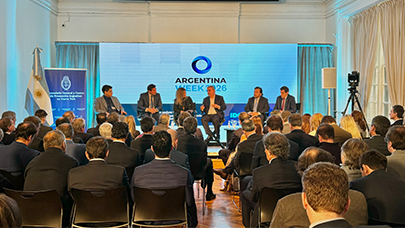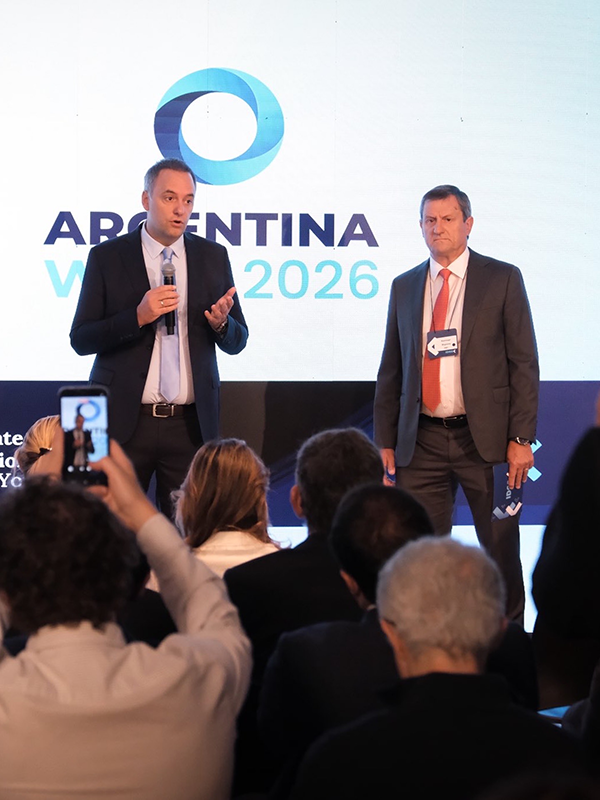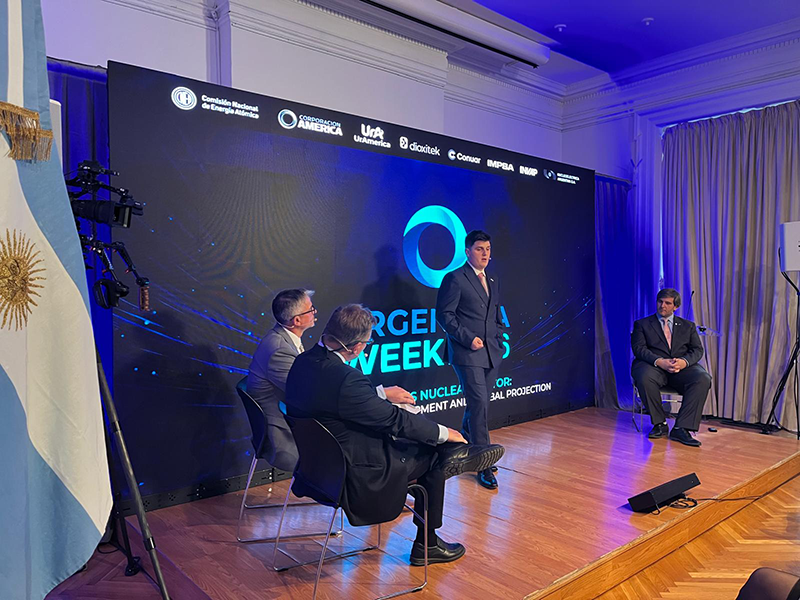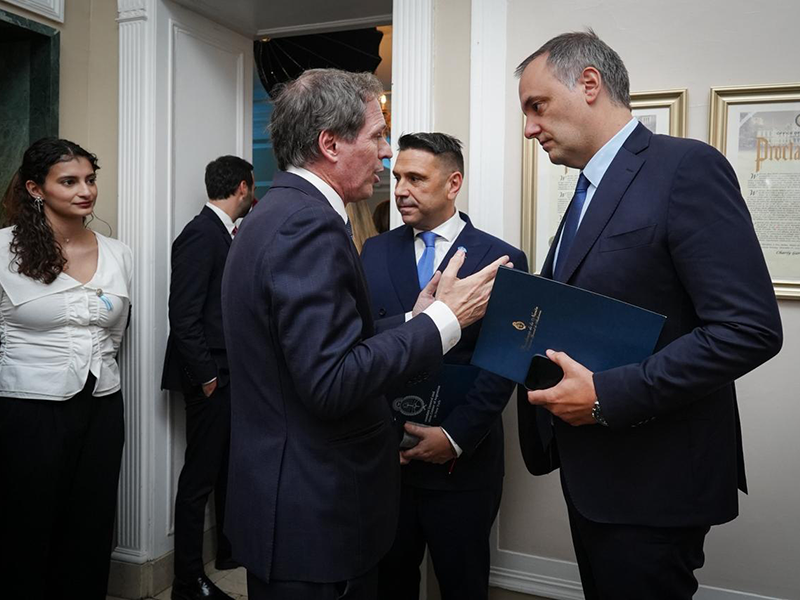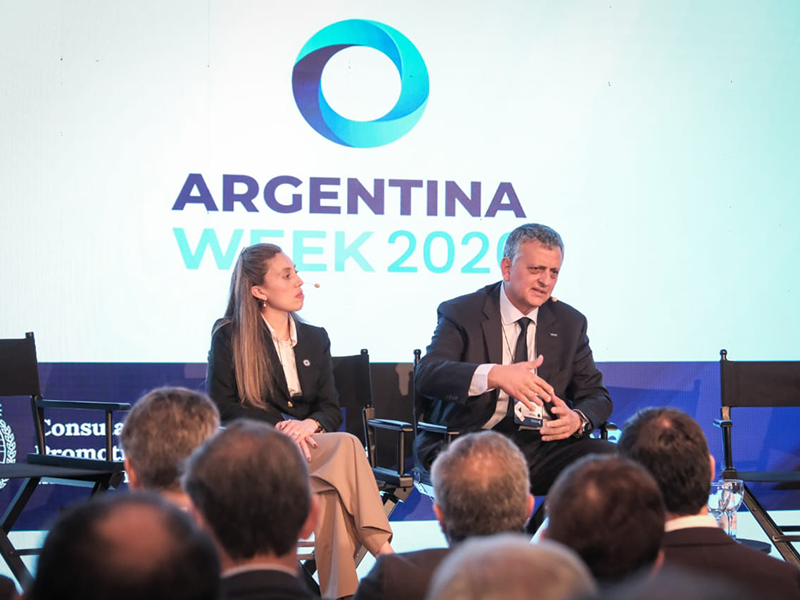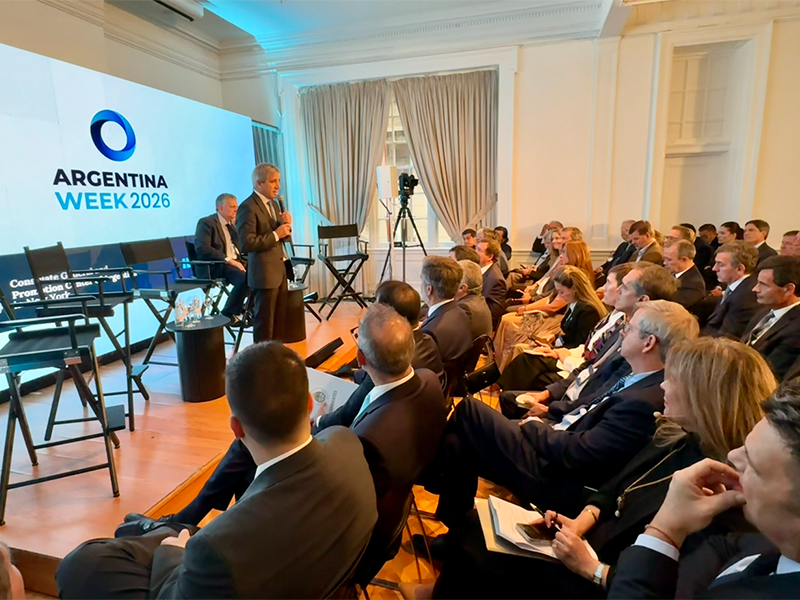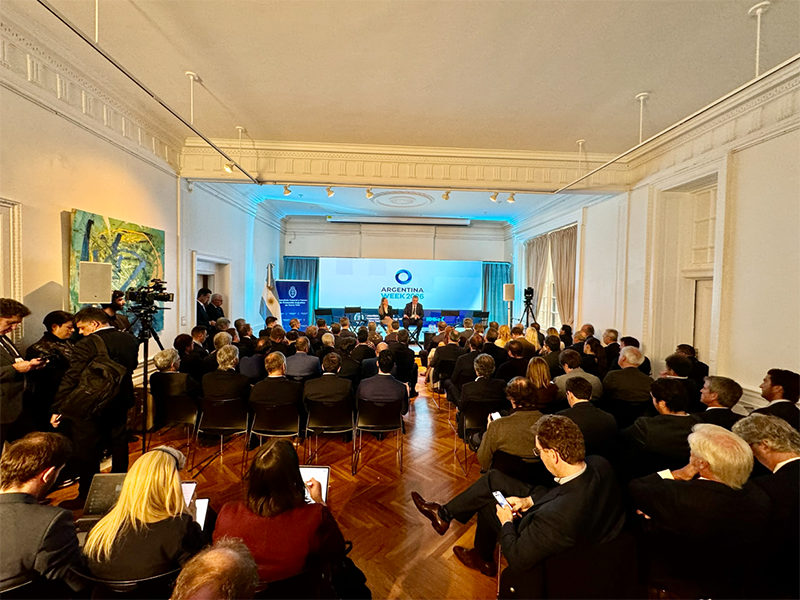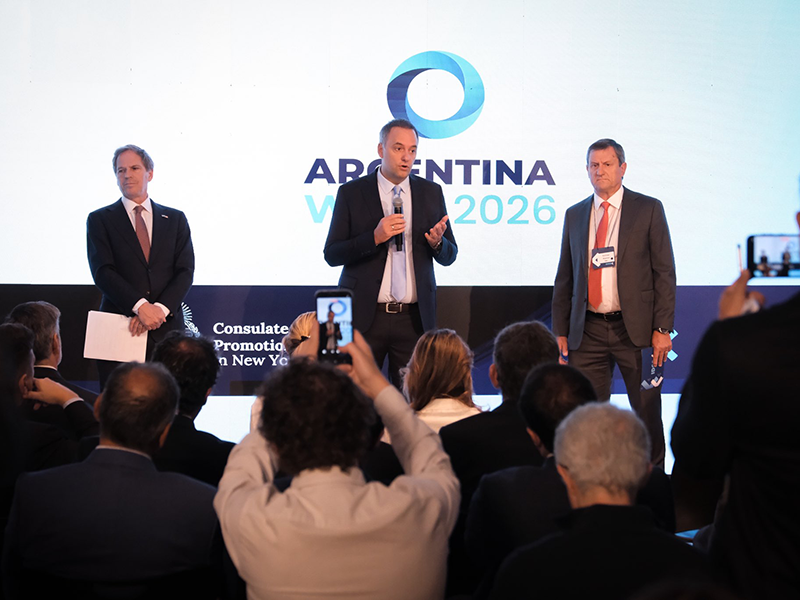

Argentina Week took place in New York from March 9 to 12 as one of the most significant investment roadshows on Argentina in recent years, with the participation of President Javier Milei in the opening session. Over four days, global investors explored opportunities in strategic sectors such as technology, energy, mining, agribusiness, science and innovation, the pharmaceutical industry, and the nuclear sector. More than 50 presidents and CEOs shared their perspectives on Argentina’s renewed macroeconomic framework and the reforms aimed at promoting investment.
Organized by the Embassy of the Argentine Republic in Washington, DC, together with JP Morgan, Bank of America, and Kazeck, and with the support of Citi, the U.S. Chamber of Commerce, AmCham, and AS/COA, Argentina Week combined high-level panels and private meetings designed to foster new investment partnerships.
In this context, the Consulate General and Promotion Center of the Argentine Republic in New York hosted several key meetings.
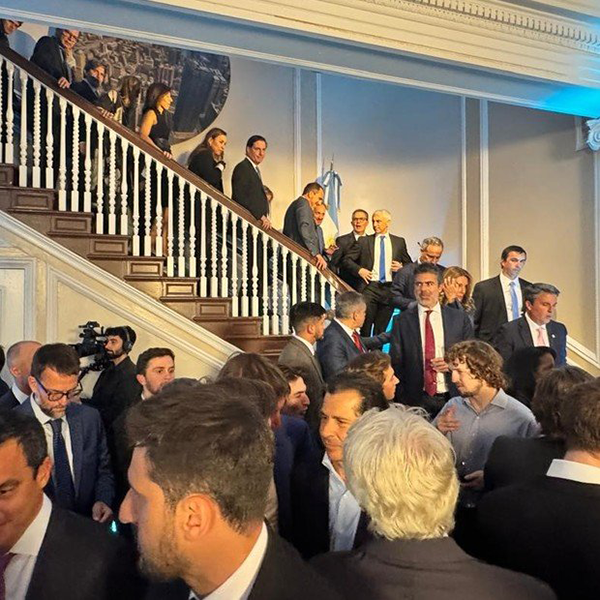
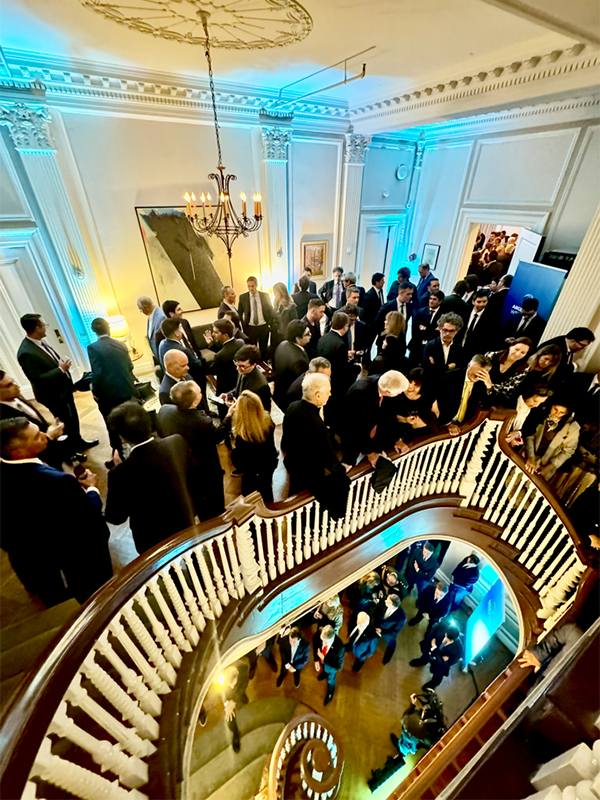
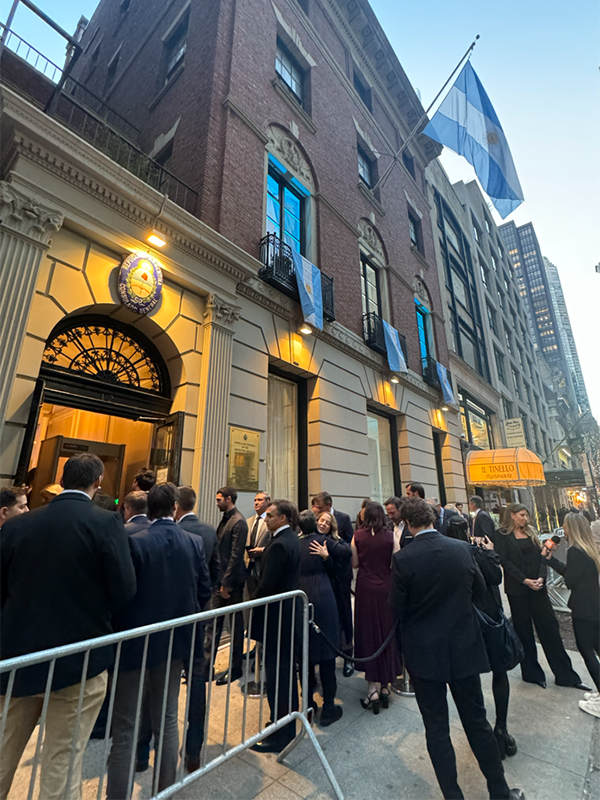
The agenda began on March 9 with an opening reception at the Consulate, bringing together business leaders, investors, and representatives from both the public and private sectors. The event featured remarks by the Chief of Cabinet of Ministers, Manuel Adorni, and the Ambassador of Argentina to the United States, Alejandro Oxenford, who highlighted the growing global interest in Argentina’s economic reform process and the positive outlook for new investments, following welcoming remarks by the Consul General.
On the second day, the Consulate hosted a meeting dedicated to the potential of Argentina’s nuclear sector, chaired by the Secretary for Nuclear Affairs, Federico Ramos Napoli, with the participation of nearly one hundred investors and representatives from the energy and technology sectors. The presentation highlighted the country’s capabilities across the nuclear fuel cycle and the private investment opportunities emerging in the sector, in a context shaped by structural reforms and the new investment incentive framework, including the Large Investment Incentive Regime (RIGI).
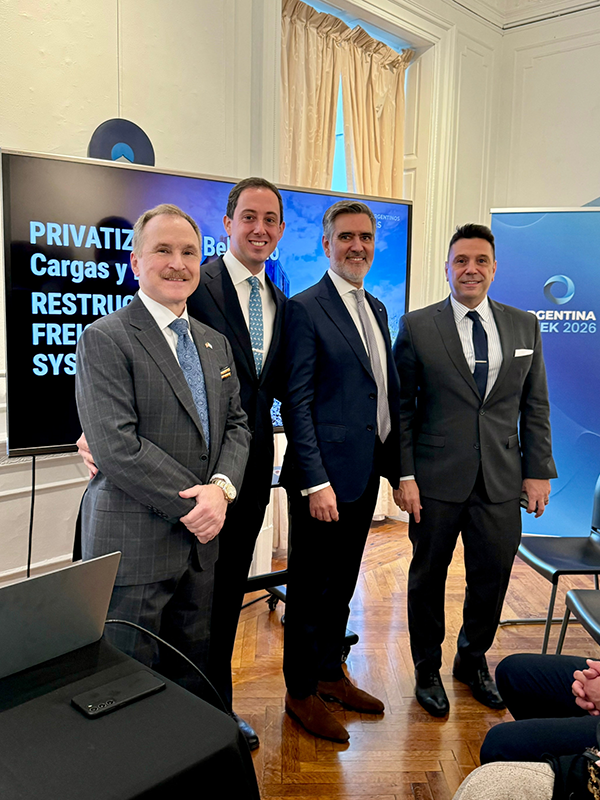
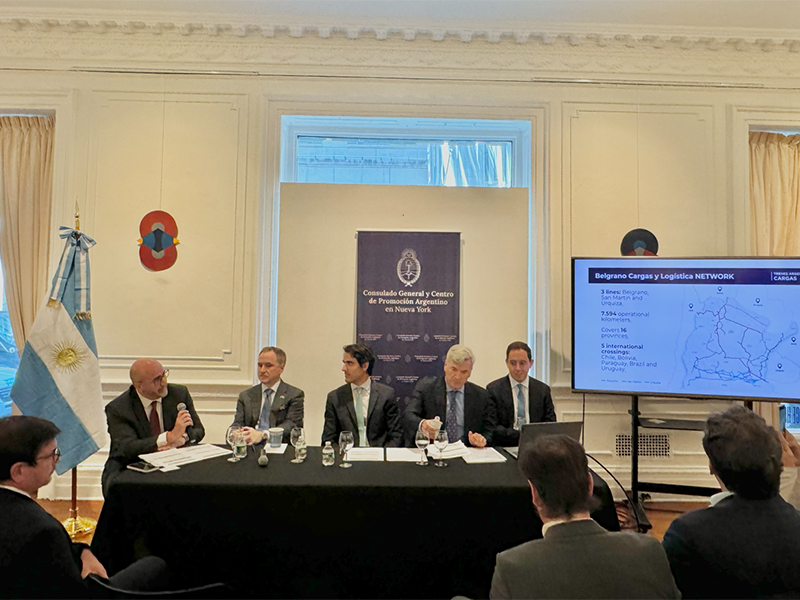
The agenda continued on March 11 with the presentation of the Belgrano Cargas freight rail concession project to investors, banks, and international financial institutions, led by Alejandro Núñez, President of Trenes Argentinos Cargas. The meeting also featured the participation of the U.S. Ambassador to Argentina, Peter Lamelas, and Secretary for International Trade Relations, Fernando Brun, who emphasized the importance of advancing logistics infrastructure to strengthen key sectors of Argentina’s economy.
Activities concluded on March 12 with a session organized jointly with IDEA and Argentina’s Ministry of Foreign Affairs, bringing together investors, business leaders, and Argentine governors at the Consulate for a direct dialogue on investment opportunities. The agenda included opening remarks by Manuel Adorni, Alejandro Oxenford, and IDEA President Santiago Mignone, followed by a macroeconomic presentation by economist Santiago Bulat and a CEOs’ panel on competitiveness and the business climate.
Two additional panels focused on strategic mining and critical minerals, featuring the governors of Catamarca, San Juan, Jujuy, Salta, and Santa Cruz. This session was opened by Minister of Economy Luis Caputo and moderated by Paula Uribe, Director of Government Relations for Latin America at Rio Tinto. A second panel on energy, oil, and gas included the governors of Mendoza, Neuquén, Río Negro, Chubut, and Corrientes, moderated by Lesly Henderson Rubio, Executive Director of the U.S.-Argentina Business Council (USABC).
During their remarks, the provincial leaders highlighted the strong potential of their provinces to attract investment in strategic sectors and emphasized the central role of the Large Investment Incentive Regime (RIGI) in promoting new productive projects, generating employment, and fostering regional development. Closing the event, the Executive President of PromArgentina, Diego Sucalesca, also highlighted the positive impact of Argentina’s current economic transformation, noting that the ongoing macroeconomic stabilization process and the structural reforms underway are contributing to a more predictable and competitive environment for business, thus creating increasingly favorable conditions for attracting international investment and strengthening Argentina’s integration into global value chains.
Hosting these meetings at the Consulate reaffirmed its role as a platform for engagement between the public sector, the private sector, and the international investment community, promoting Argentina’s economic, commercial, and technological opportunities in one of the world’s leading financial centers.